
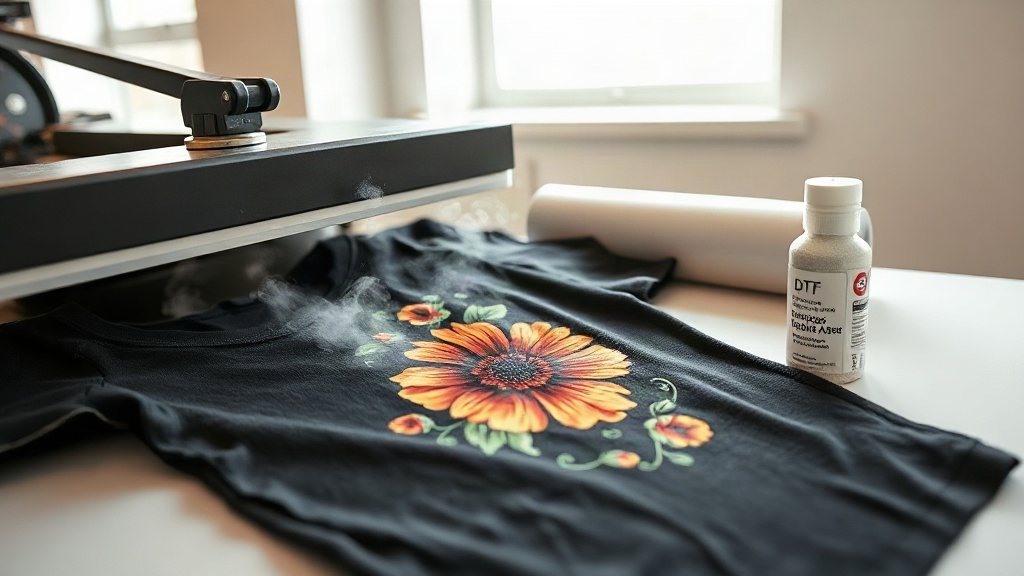
When I first heard about DTF Transfers, I was skeptical. As someone who has spent years screen printing and working with heat transfer vinyl (HTV), I thought I had seen it all. But after testing DTF on a whim, I was hooked. The ability to print full-color, detailed designs without weeding or layering opened up a new world of possibilities. In this guide, I'll share what I've learned so you can avoid the mistakes I made and get professional results from the start.
What Are DTF Transfers?
DTF stands for Direct to Film. It's a printing method where your design is printed onto a special PET film using water-based inks, then coated with a hot-melt adhesive powder. Once the powder is cured, the transfer is ready to be applied to fabric using a heat press. Unlike DTG (Direct to Garment), which prints directly onto the shirt, DTF allows you to print on a wide range of materials, including cotton, polyester, blends, and even leather. The process is relatively new but has gained massive popularity because it eliminates many of the limitations of traditional methods.
Why Choose DTF Transfers?
There are several reasons why DTF has become my go-to for certain projects. First, the color vibrancy is outstanding. Because the design is printed on film, you can achieve bright, opaque colors even on dark garments without a white underbase. Second, DTF works on almost any fabric. I've used it on 100% cotton, 50/50 blends, and even 100% polyester with great success. Third, there's no weeding involved. If you've ever spent hours weeding intricate HTV designs, you know how much of a time-saver this is. Finally, DTF transfers have excellent durability when applied correctly. They stretch with the fabric and withstand repeated washing without cracking or fading.
The DTF Process Step by Step
1. Design Preparation
Start with a high-resolution image. Vector files are ideal, but 300 DPI PNGs work well too. Remember that DTF prints are opaque, so you don't need to worry about color separation or trapping. However, you should mirror your design horizontally before printing because the transfer is applied face down. Also, consider the size: typical DTF transfers range from small logos to full-front prints. Make sure your design fits within the printable area of your DTF printer, usually around 13x19 inches for desktop models.
2. Printing
DTF printers use specialized inks (CMYK plus white) and print onto a film coated with a release agent. The white ink layer is crucial because it provides opacity. After printing, the film is dusted with hot-melt adhesive powder. You can do this manually or with an automatic shaker. The excess powder is removed, and then the film is cured in an oven or with a heat gun until the powder melts and becomes glossy. This step is critical: under-curing leads to poor adhesion, while over-curing can make the transfer brittle.
3. Applying the Transfer
Once your transfer is ready, set your heat press to 325°F (160°C) with medium pressure. Place the transfer on the garment with the printed side facing up (the adhesive side down). Cover with a Teflon sheet or parchment paper. Press for 15-20 seconds. Then, while the transfer is still hot, peel off the film. You can do a hot peel or cold peel depending on the film type; most modern DTF films are hot peel. After peeling, press again for 5-10 seconds to ensure the adhesive fully bonds. That's it! Your garment is ready.
Common Mistakes and How to Avoid Them
- Insufficient pressure: If the pressure is too low, the transfer won't adhere properly. Adjust your heat press until you see a slight indentation in the fabric.
- Wrong temperature: Too hot and the film may curl or the adhesive may burn; too cold and it won't stick. Always use a temperature gun to verify your press.
- Not pre-pressing the garment: Moisture in the fabric can cause the transfer to peel. Always pre-press for 5-10 seconds to remove wrinkles and moisture.
- Peeling too soon or too late: Follow the film manufacturer's instructions. Hot peel is usually immediate, while cold peel requires waiting until the transfer cools completely.
- Poor powder application: If powder isn't evenly applied, you'll get weak spots. Use a shaker for consistency.
DTF vs. Other Transfer Methods
How does DTF stack up against HTV and DTG? HTV is great for simple, single-color designs and offers a matte or glossy finish, but it requires weeding and layering for multi-color designs. DTG excels on 100% cotton but struggles on synthetics and often requires pre-treatment. DTF, on the other hand, handles complex, multi-color designs on virtually any fabric without pre-treatment. It's also more durable than DTG on polyester. The main drawback of DTF is the initial investment in a printer and supplies, but for those who do a lot of custom apparel, it pays off quickly.
Tips for Long-Lasting DTF Prints
To ensure your DTF transfers last, follow these care instructions: wash the garment inside out in cold water, tumble dry low or hang dry, and avoid ironing directly on the print. Also, wait at least 24 hours before washing to allow the adhesive to fully cure. With proper care, DTF prints can outlast the garment itself.
Frequently Asked Questions
Can I use DTF transfers on dark colors?
Absolutely. DTF uses a white ink layer that acts as a base, so colors remain vibrant on dark fabrics. No need for a separate white underbase.
Do I need a special printer for DTF?
Yes, DTF requires a printer that uses DTF inks and can print white ink. Converted Epson printers are popular for small-scale setups.
How long do DTF transfers last?
When applied correctly and cared for properly, DTF transfers can last as long as the garment, often 50+ washes without significant fading or cracking.
Is DTF transfer application different for different fabrics?
While the basic process is the same, you may need to adjust temperature and pressure for specialty fabrics like nylon or leather. Always test on a scrap piece first.
Can I layer DTF transfers?
Yes, you can layer DTF transfers, but it's best to apply them one at a time, pressing each before adding the next. However, layering is rarely necessary because DTF can print full-color designs in one go.